WoTangKa · Complete catalogue hub Everything on one page · one-stop reference lookup
Bringing the site's 6 featured catalogues together on one page: the eight thangka categories, 109 theme entries, the three material catalogues 224 items (ghau boxes / mounting mats / picture frames, all official reference numbers), zencicadas Print Workshop giclee thangka prints 66 items (ZC71132 – ZC71197 — Buddhas 20 · Bodhisattvas 18 · Wrathful Deities & Protectors 11 · Wealth Deities 6 · Masters & Adepts 4 · Taras 3 · Female Buddhas & Dakinis 2 · Auspicious Symbols 2), plus Complete reference index and Cross-catalogue search. Quote the reference number for a price.
Track one · figures and content What to choose · 109 thangka themes
Decide which figure and which type of thangka first, then move on to materials and mounting.
Track two · finished pieces and materials what goes with what · 224 material items + 66 printed thangkas
The four catalogues in order: ghau box → zencicadas Print Workshop · giclee thangka print → mounting mat → picture frame, all drawn from the official WoTangKa reference numbers — consecutive and individually searchable.
ghau box Ghau Box
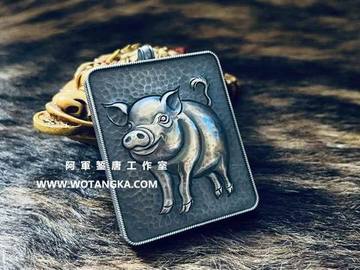
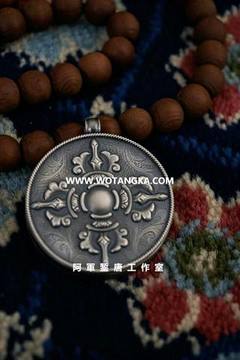
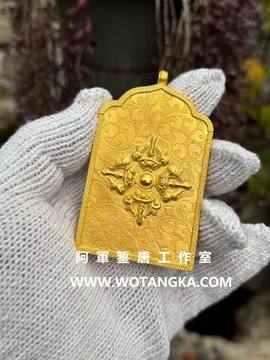
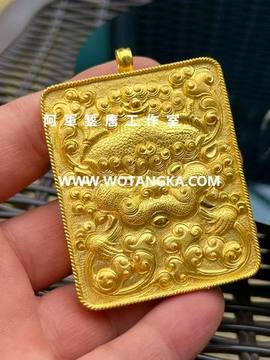
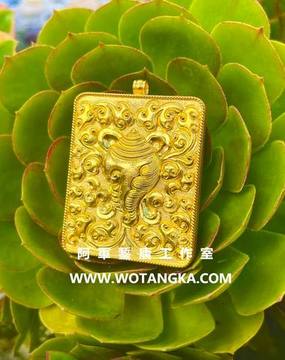
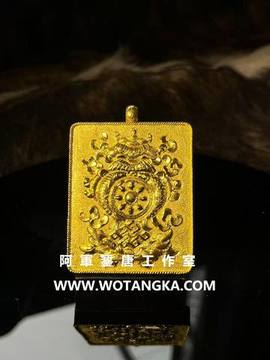
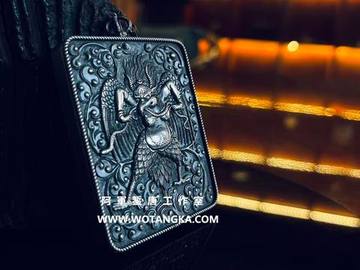
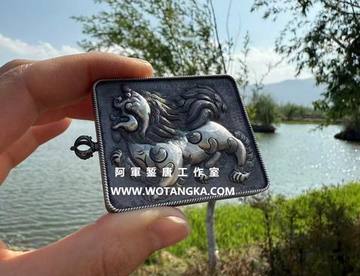
The traditional portable Tibetan shrine, made for pendant thangkas (tsakli), hand-chased throughout.
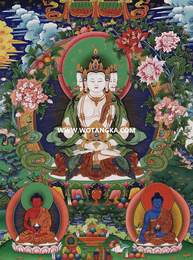
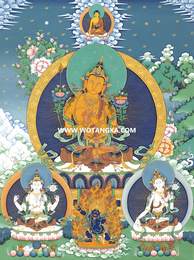
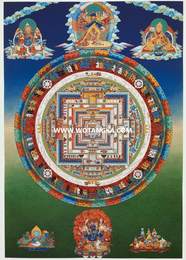
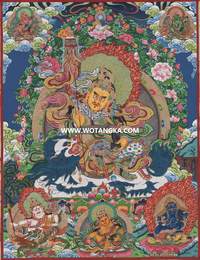
zencicadas Print Workshop · giclee thangka print Art Reproduction
Giclee fine art inkjet reproductions, part of the same reference-number system as the ghau boxes, mounting mats and picture frames (ZC prefix). All 66 are gathered on a dedicated hub page, filterable three ways — by theme (Buddhas 20 · Bodhisattvas 18 · Wrathful Deities & Protectors 11 · Wealth Deities 6 · Masters & Adepts 4 · Taras 3 · Female Buddhas & Dakinis 2 · Auspicious Symbols 2), by size, and by price band. Enter a reference number to jump straight to the piece, then quote it for a price.
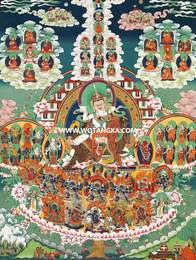
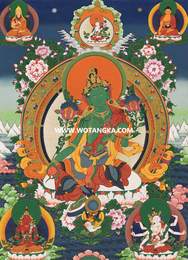
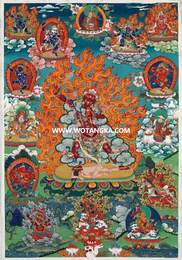
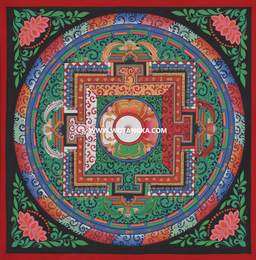
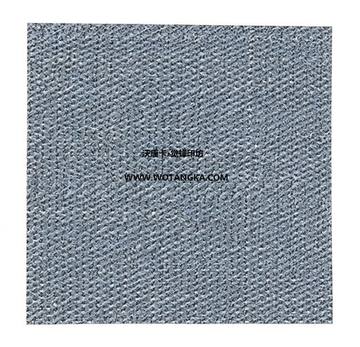
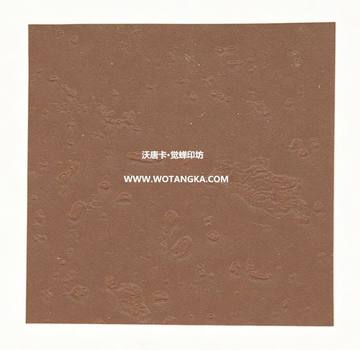
mounting mat Mounting Mat
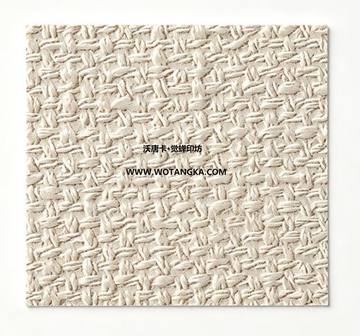
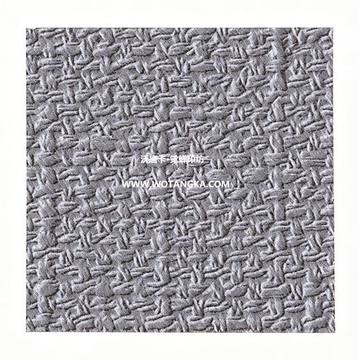
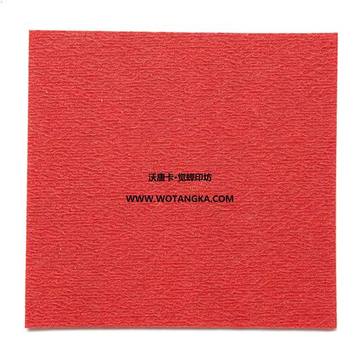
The mounting mat: a high-density, heavyweight specialty board positioned between the artwork and the glazing within the frame.
picture frame Picture Frame
Framing mouldings for thangka mounting, in two families - solid wood (kiln-dried, degreased) and aluminium (high-low groove stepped profile) - mitred at 45°, compatible with mounting mats and protective panels.
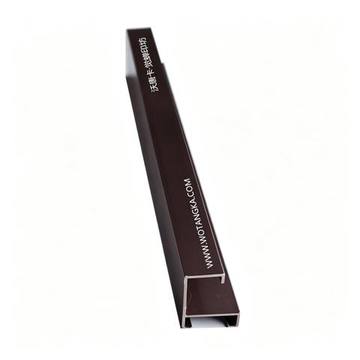 PictureFrame0191
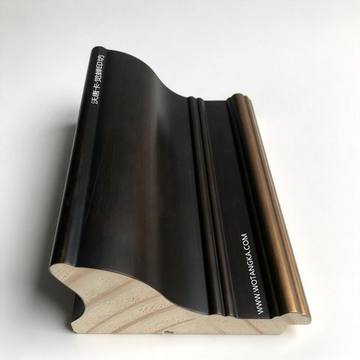 PictureFrame0220
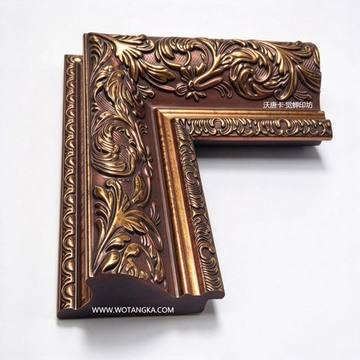 PictureFrame0210
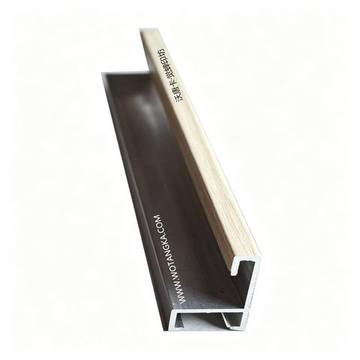 PictureFrame0171
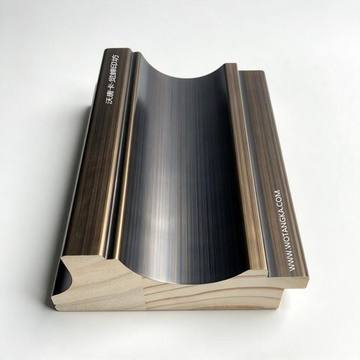 PictureFrame0221
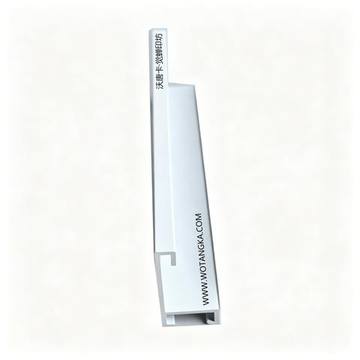 PictureFrame0186
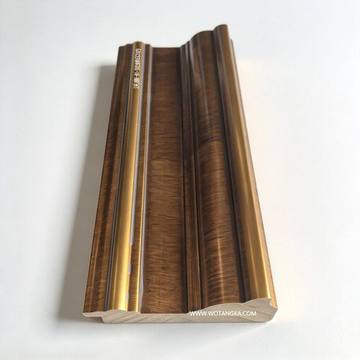 PictureFrame0229
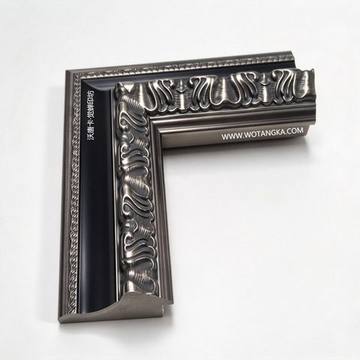 PictureFrame0213
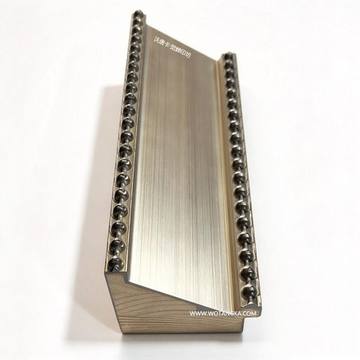 PictureFrame0230
Recommended pairings Connecting "which figure" with "what to pair with it"
This section is unique to this page: the three material catalogues each cover only their own part, so here are combination suggestions — no more flipping between pages.
A complete framed piece = print + mounting mat + frame. Pick one of each and quote the three reference numbers together for a single price.
| frame colour family | Items | Suggested mat |
|---|---|---|
| Warm Brown | 17 | Brown · White & Cream |
| Deep Brown-black | 26 | Black · Grey · White & Cream |
| Red-brown | 12 | Red & Pink · Brown |
| Natural Wood Yellow | 9 | Gold & Yellow · White & Cream |
| Grey | 11 | Grey · White & Cream · Blue |
| White | 9 | White & Cream · Grey |
| Gold | 24 | Gold & Yellow · Red & Pink |
| Silver | 13 | Grey · Blue · White & Cream |
| Bronze | 9 | Brown · Gold & Yellow |
Ghau boxes are designed for pendant thangkas (tsakli) — to hold, wear and store them. Choose the small thangka’s theme first, then pick a box motif to match.
| Form | size range | reference range |
|---|---|---|
| Square Window | Within 5 cm H x 4 cm W | Square window — 34 items |
| Round Window | 3 / 3.5 / 4 cm diameter | Round window — 3 items |
| Double Mirror (Square Window) | Square-window form, windowed on both faces | Double mirror (square window) — 2 items |
For a gift, start with who it is for and which figure to choose: three quick-reference tables — by zodiac guardian, by the recipient’s wish, by relationship — settle the yidam, after which you choose the mounting grade and gift box.
Complete reference index 224 material items + 66 printed thangkas · click a reference to open its catalogue and highlight it
Reference prefixes tell the catalogues apart: Ghau = ghau box | ZC = zencicadas Print Workshop · giclee thangka print | MAT = mounting mat | PictureFrame = picture frame. Click any reference number to open the matching catalogue page in a new tab, scrolled straight to that item.
Contact Quote the reference number for a price · text here can be selected and copied
General notes The following three sections are taken from the relevant catalogue page and apply to every reference in that catalogue
Ghau box catalogue notes Ghau1006-Ghau4162 · General notes, applying to every reference number in this catalogue
1. What a ghau box is
A ghau box (also written gau box) is the traditional portable shrine of Tibet, its name taken from the Sanskrit word for "box". Practitioners place a small image, a mantra, a relic or a small thangka inside and wear it at the chest or on the belt — at once a shrine on the move and an amulet. WoTangKa ghau boxes are made specifically for tsakli (tsakli) designed to be offered, worn and stored — both an ornament and a safeguard.
2. General specifications
| Material | Sterling silver (or fine gold); silver bodies can be partly gilded |
|---|---|
| Size | Square window: 5 cm H x 4 cm W. Round window: 3 / 3.5 / 4 cm diameter (both fit standard pendant thangkas). |
| Colour | Polished silver / antique-finish silver (partly gildable) |
| Craft | Hand-chased throughout; thangka-related motifs, sutra text and auspicious symbols can all be engraved to order |
| Lid type | A telescoping two-piece lid — secure, hard to dislodge, easy to open for the small thangka |
| Interior finish | Polished interior so the small thangka is not scratched |
| Cord attachment | Ring or lotus attachment available |
| Lead time | 7-35 days, depending on how intricate the work is (the finer the chasing, the longer it takes) |
| Fits thangka | Square: up to 5 cm H x 4 cm W. Round: up to 3 / 3.5 / 4 cm diameter. Custom sizes can be matched to a specific small thangka. |
| Packaging | Presented in a fine gift box, suitable for gifting and collecting; the box can be customised |
| Notes | Size, motif and lid type can all be made to order |
3. What the motifs mean
- Twelve Zodiac Animals All twelve are available — Rat, Ox, Tiger, Rabbit, Dragon, Snake, Horse, Goat, Monkey, Rooster, Dog and Pig. These are guardian pieces for one’s zodiac year, best chosen by birth sign.
- Crossed vajra (also called karma-vajra) The most emblematic of tantric ritual motifs for subduing negative forces. The crossed form stands for absolute stability and indestructibility, and it is widely used for protection.
- Kirtimukha Beast/Kirtimukha Head In Tibetan, kirtimukha (literally "face of glory") is a fierce mythical beast. Both the kirtimukha head and the kirtimukha beast motifs are used to ward off evil and to draw in wealth and good fortune. (The official site uses both "支扎巴" and "支巴扎" — a source-site typo for the same motif: both are given as kirtimukha here.)
- Right-turning white conch One of the Eight Auspicious Symbols, standing for the spreading of the dharma and far-reaching renown — a mark of auspicious completeness.
- Eight Auspicious Symbols/Treasure-gathering Elephant The Eight Auspicious Symbols — parasol, golden fish, treasure vase, lotus, right-turning white conch, endless knot, victory banner and dharma wheel. The treasure-gathering elephant is used to draw in wealth.
- Garuda (Khyung) A protector in Tibetan Buddhism who subdues the naga and removes the obstacles of illness — fierce and warding off evil.
- Snow Lion (Gangkar Sengge) The snow lion — dignity, strength and fearlessness, and an auspicious emblem of Tibet.
- Lion Playing with a Ball/Azure Dragon of the East A Han Chinese auspicious motif absorbed into Tibetan metalwork, carrying celebration and the guarding of the east.
- Six-Syllable Mantra/Avalokiteshvara's Lotus-holding Hand An Avalokiteshvara theme, with the Six-Syllable Mantra chased into the face of the box as a mark of compassionate protection.
- Double Mirror Both faces of the box are mirror-windowed, making better use of the interior; square-window form.
- Note The "motif" filter is single-select and assigns each piece to its dominant theme. Some official titles carry two themes at once — for example "kirtimukha head with four red beads and crossed vajra" is both a kirtimukha-head piece and a crossed-vajra piece. In such cases the theme named first in the title prevails; the other theme is still shown in full in the card title.
Mounting mat catalogue notes MAT0101-MAT0155 · General notes, applying to every reference number in this catalogue
1. Definition
A mounting mat — also called a frame backing mat — is a high-density, heavyweight specialty board placed between the artwork and the glazing inside the frame. It is an indispensable part of mounting paintings, photographs, thangkas and calligraphy.
2. What it does
- Separation, anti-stick It separates the glazing from the artwork, so condensation in humid weather never touches the paper or pigment — preventing cockling, flaking and photographs sticking to the glass.
- Moisture and dust barrier The substantial board blocks dust and damp in the air, reducing what settles on the surface and slowing the yellowing and ageing of paper.
- Cushioned air gap Cutting the mat leaves an air gap between artwork and glazing. Any knock is buffered, and the glass cannot press against and scratch the surface.
- Compositional margin Varying the width of the mat creates breathing space and focuses the eye — a small work gains presence, a large one gains clear layers.
- Colour framing Coloured mats can be matched to the tone of the image — a light painting with a dark mat, a rich one with a pale mat — lifting the overall look and the perceived quality of the piece.
- Conceals flaws It conceals uneven edges or minor trimming damage and gives the artwork a clean boundary.
- Holds the work flat The cut window holds all four edges of the artwork, preventing it from shifting, creasing or tilting inside the frame and keeping it flat over years of hanging.
3. Where it applies
Chinese painting, drawing, watercolour, oil sketches, photographs, thangkas, prints and decorative art — any work that can be framed.
Picture frame catalogue notes PictureFrame0101 — PictureFrame0230 · General notes, applying to every reference number in this catalogue
1. What framing is for
- Long-term protection that extends the life of the work Thangkas are usually made with mineral pigments on natural fabric. Left exposed, they shed pigment, the canvas takes up moisture and mould, and dust grinds at the surface. A frame with a protective panel and a moisture-barrier backing forms a complete protective layer that blocks dust, damp and ultraviolet light and absorbs knocks, which makes it especially suitable for homes and businesses where a piece is hung for the long term.
- Sets the atmosphere and suits both offering and display Traditional profiles suit the formality of a shrine room; simple, contemplative profiles suit modern interiors. Either way the thangka stops being an isolated painting and becomes the centre of a space that carries its cultural character.
- Visual framing that brings out the detail The frame serves the painting. Tone, width and profile are matched precisely so the frame never competes for attention, but sets off the fine lines, saturated colour and intricate patterns of the thangka.
- A standard form that is easy to handle and collect Proper mounting gives a thangka a standard form for hanging and storage and lowers the risk of damage in transit. For a collection-grade piece, professional mounting preserves its condition and adds to both completeness and collectible value.
2. Core craft of thangka framing
- Stabilised substrate: solid-wood mouldings go through a kiln-drying and degreasing process that holds the wood's moisture content in a stable range; aluminium mouldings are formed in one piece with a high-low groove stepped profile, moisture-proof and warp-resistant. Both tolerate regional differences in temperature and humidity, reducing warping and cracking after long-term hanging.
- Precision cutting and jointing Standard frames are mitre-cut at a precise 45°, giving tight joints and continuous lines. Square and rounded profiles can also be made to order, with dedicated fasteners reinforcing every joint so that even large formats stay rigid.
- Low-emission surface finishing Water-based lacquer, heat-transfer wood grain and hand-gilding are used, with no sharp odour. Matt and semi-matt finishes dominate, cutting reflections that would interfere with the image and improving both abrasion resistance and resistance to yellowing.
- Layered groove fitting The moulding leaves room for several internal grooves, accommodating different combinations of mat, yellow brocade border, protective panel and moisture-barrier backing — supporting both traditional multi-layer mounting and slim, minimal mounting.
3. Mounting methods and where they suit
| Mounting method | Highlights | Suits |
|---|---|---|
| Single-mat mounting | Clean and crisp, letting the image lead | Modern interiors, hung in a living room |
| Multi-mat mounting | Two or three stepped layers for greater depth | Study or tea room, where layers matter |
| Double yellow-brocade mounting | Traditional Tibetan form | Buddha themes, for a shrine room |
| Full-bleed, no mat | Full-bleed image, minimal and modern | Modern Chinese, minimal interiors |
4. Choosing a protective panel
- Standard acrylic Light and shatter-resistant — the first choice for large formats.
- Museum-grade high-clarity acrylic The clearest glazing and UV-filtering — standard on high-end collector mounting.
- High-clarity glass Clear and hard, but heavy — best for smaller wall-hung pieces.
- Tip: thangkas dislike damp. In humid conditions choose an acrylic panel together with a sealed moisture-barrier backing.
5. Comparing frame grades
| Grade | mounting mat | Panel | Special finishes | Lead time | Best for |
|---|---|---|---|---|---|
| Economy | Single mat | Standard acrylic | Standard | 5-7 days | First purchase, hung in a living room |
| Keepsake | Stepped multi-layer mat | High-clarity acrylic | Rounded corners available | 7-15 days | Study or tea room, where layers matter |
| Collector | Yellow brocade / multi-layer + gilding | Museum-grade high-clarity acrylic | Made to order | 10-25 days | Gifting and collector grade |
6. Matching advice
- Suggested theme Buddha images / mandalas / landscape scenes.
- Suggested style New Chinese / modern Chinese / Japanese contemplative.
- Space advice Living room, study, reception room, tea room, meditation room, yoga room.
- Colour tip Natural-wood and gold tones give strong contrast and set the thangka off well. If you choose traditional Tibetan yellow-brocade mounting, switch to a dark walnut or antique bronze-gold frame.
7. Custom sizes and delivery
- Made to size: cut to any image area, measured from the actual artwork.
- Lead time: standard sizes 5-7 days; made-to-order 7-15 days; special pieces 10-25 days. Catalogue pages quote a single 7-25 day range; the exact figure is confirmed with your order.
- Shipping: lead times exclude transport. Urgent orders can be discussed.
8. Care instructions
- Keep out of direct sunlight and away from damp.
- Check the mat and backing for damp once a year.
- Dust with a soft dry cloth. Do not wipe wood-grain or panel surfaces with a damp cloth.